Ayurvedic Management of the Raynaud Phenomenon
If you have felt
- Cold fingers or toes
- Skin turning white and then blue
- The numb, prickly feeling upon warming or stress relief
These indicate a condition named Raynaud phenomenon or Raynaud syndrome. Research indicates that about 4% of people have Raynaud syndrome, which occurs more in females. This condition is mostly prone to cold climates and causes severe localized pain, discolouration, and sensations of cold/numbness. Raynaud’s phenomenon is characterized by three major alterations in its mechanism: lower blood flow, blood vessel constriction, and neurogenic, inflammatory, and immunological responses. It is caused by mental stress and a cold environment. The basic reason in all cases is an underlying hyperactivity of the sympathetic nervous system.
However, the specific pathophysiology varies per type. The primary type has increased sensitivity for the reasons indicated above, resulting in vasoconstriction. Secondary type occurs when normal blood vessel function is disturbed for the same reasons outlined above, resulting in vasoconstriction, ischemia, and tissue death. On the other hand, the understanding of Ayurveda indicates an imbalance in vata dosha. It is called “Siragata vata” in Ayurveda and leads to symptoms like suptata (numbness) and stabdhata (stiffness), which are followed by dourbalya (debility) and karshya (emaciation).
Let’s elaborate on the management of the Raynaud phenomenon in Ayurveda.
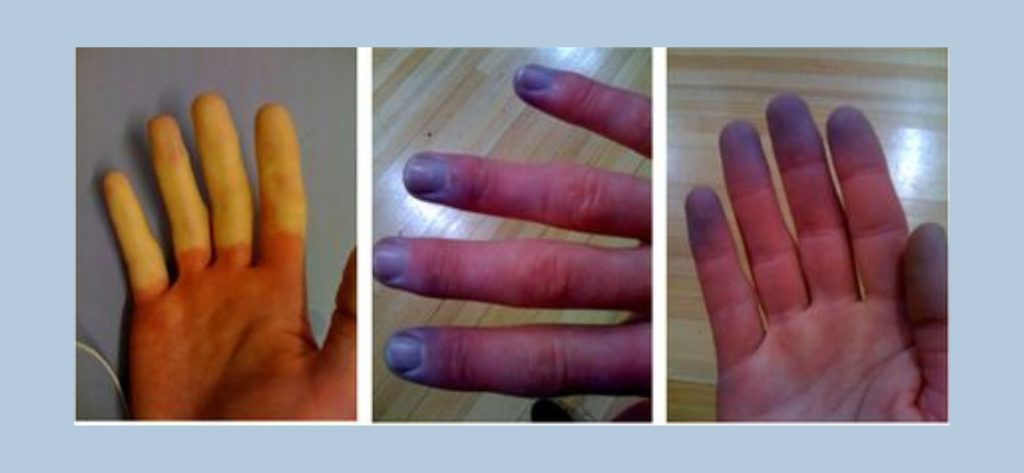
Ayurvedic understanding of the Raynaud phenomenon
Ayurvedic name | Siragata vata |
Nidana | Dhatukshaya (degeneration of body tissue) Avarana (obstruction in the channels) |
Samprapti | Vata dosha is vitiated and gets lodged in the blood vessels |
Lakshana | Aadmana and riktata of siras (alternate distension and emptying of blood vessels) |
Prognosis | Yapya |
Chikitsa | Samana – Snehanam Shodhana – Raktamokshana |
Management of Raynaud phenomenon in Ayurveda
The prime focus of Ayurvedic treatment for the Raynaud phenomenon is balancing doshas and improving blood circulation. The vata dosha, which is primarily vitiated in this condition, is balanced by the therapies mentioned below.
Treatment | Description | Benefits | Method/Types |
Abhyanga (oil massage) | Daily self-massage with warm oil. | Improves blood circulation, reduces stress, and balances Vata dosha. | Sesame oil, mustard oil, or a special mix of herbal oils are used. |
Swedana (steam therapy) | Use of steam to induce sweating. | Helps in dilating blood vessels, improving circulation, and eliminating toxins. | Use a steam bath or warm compresses on the affected areas. |
Nasya (nasal administration) | Administration of herbal oils through the nasal passages. | Balances Vata dosha, helps in reducing stress and improves circulation. | The use of Anu Taila and Shadbindu Taila is recommended. |
Basti (medicated enema) | Administration of herbal decoctions or oils through the rectum. | Effective in balancing Vata dosha, detoxifying the body, and promoting overall health. | Types: Anuvasana Basti (oil-based) and Niruha Basti (decoction-based). |
Pinda sweda (bolus formentation) | Application of warm boluses filled with medicinal herbs. | It relieves stiffness, improves circulation, and provides warmth. | Boluses are dipped in warm oil or herbal decoction and applied to the affected areas. |
Seka (pouring of warm herbal decoctions) | Pouring warm herbal decoctions over the affected areas. | Improves circulation and provides warmth. | Use warm herbal decoctions like Dashamoola Kashaya for pouring. |
Virechana (purgation therapy) | Controlled purgation to cleanse the digestive tract. | It balances Pitta dosha and helps in detoxification. | Performed under the guidance of an Ayurvedic practitioner using specific herbs. |
Diet & Lifestyle adjustments in the Raynaud phenomenon
Dietary adjustments
1. Warm & nourishing foods:
Soups & Stews | Opt for warm, cooked foods such as soups, stews, and broths. These are easy to digest and help maintain body warmth. |
Cooked vegetables | Include a variety of cooked vegetables in your diet. Root vegetables like carrots, sweet potatoes, and beets are especially beneficial. |
Whole grains | Consume whole grains like rice, quinoa, and oats. These provide sustained energy and warmth. |
2. Warming spices
Ginger | Incorporate fresh or dried ginger into your meals and teas. |
Black pepper | Use black pepper to enhance digestion and circulation. |
Turmeric | Add turmeric to your dishes for its anti-inflammatory and warming properties. |
Cinnamon & cloves | These spices can be added to teas and desserts to provide warmth. |
3. Healthy fats
|
Ghee |
Clarified butter is highly regarded in Ayurveda for its warming and lubricating properties. |
|
Olive oil |
Use olive oil in cooking for its beneficial fats that support circulation. |
|
Nuts & seeds |
Include almonds, walnuts, flaxseeds, and sesame seeds in your diet for their warming and nourishing qualities. |
Lifestyle adjustments
1. Stress management
Yoga | Practice gentle yoga poses that promote relaxation and improve circulation. Poses like Surya Namaskar (Sun Salutation), Tadasana (Mountain Pose), and Vrikshasana (Tree Pose) are beneficial. |
Meditation | Engage in regular meditation to reduce stress and balance the mind. |
Pranayama | Practice breathing exercises such as Anulom Vilom (alternate nostril breathing) and Bhramari (bee breath) to calm the nervous system and improve circulation. |
2. Regular exercise
Moderate exercise | Engage in regular, moderate exercise like walking, swimming, or cycling to improve overall circulation and cardiovascular health. |
Hand & foot exercise | Perform specific exercises to improve blood flow to the extremities, such as stretching and flexing the fingers and toes. |
3. Keep warm
|
Layer clothing |
Wear layers to trap heat and keep the extremities warm. Gloves, socks, and scarves are essential in cold weather. |
|
Warm baths |
Take warm baths or showers to help improve circulation and maintain body warmth. |
|
Heating pads |
Use heating pads or warm compresses on the hands and feet to promote blood flow. |
Implementing these dietary and lifestyle adjustments can help manage Raynaud’s phenomenon by improving circulation, reducing stress, and maintaining overall warmth in the body
Conclusion
The Ayurvedic management of Raynaud’s phenomenon focuses on improving circulation, balancing the doshas (primarily Vata), and providing warmth to the body. Through a combination of herbal remedies, dietary adjustments, lifestyle modifications, and specific Ayurvedic therapies, it is possible to alleviate the symptoms and enhance overall well-being.
Key methods include using warming spices and foods, practising stress management techniques like yoga and meditation, and avoiding cold exposure. Ayurvedic treatments such as Abhyanga (oil massage), Swedana (steam therapy), and Nasya (nasal administration of herbal oils) are particularly beneficial in promoting circulation and reducing stress. Consulting with a qualified Ayurvedic practitioner is essential for personalized recommendations tailored to individual needs, ensuring a holistic and effective approach to managing Raynaud’s phenomenon.